
Approved PDH Continuing Education for Maryland Professional Engineers
Certificate automatically issued upon completion.
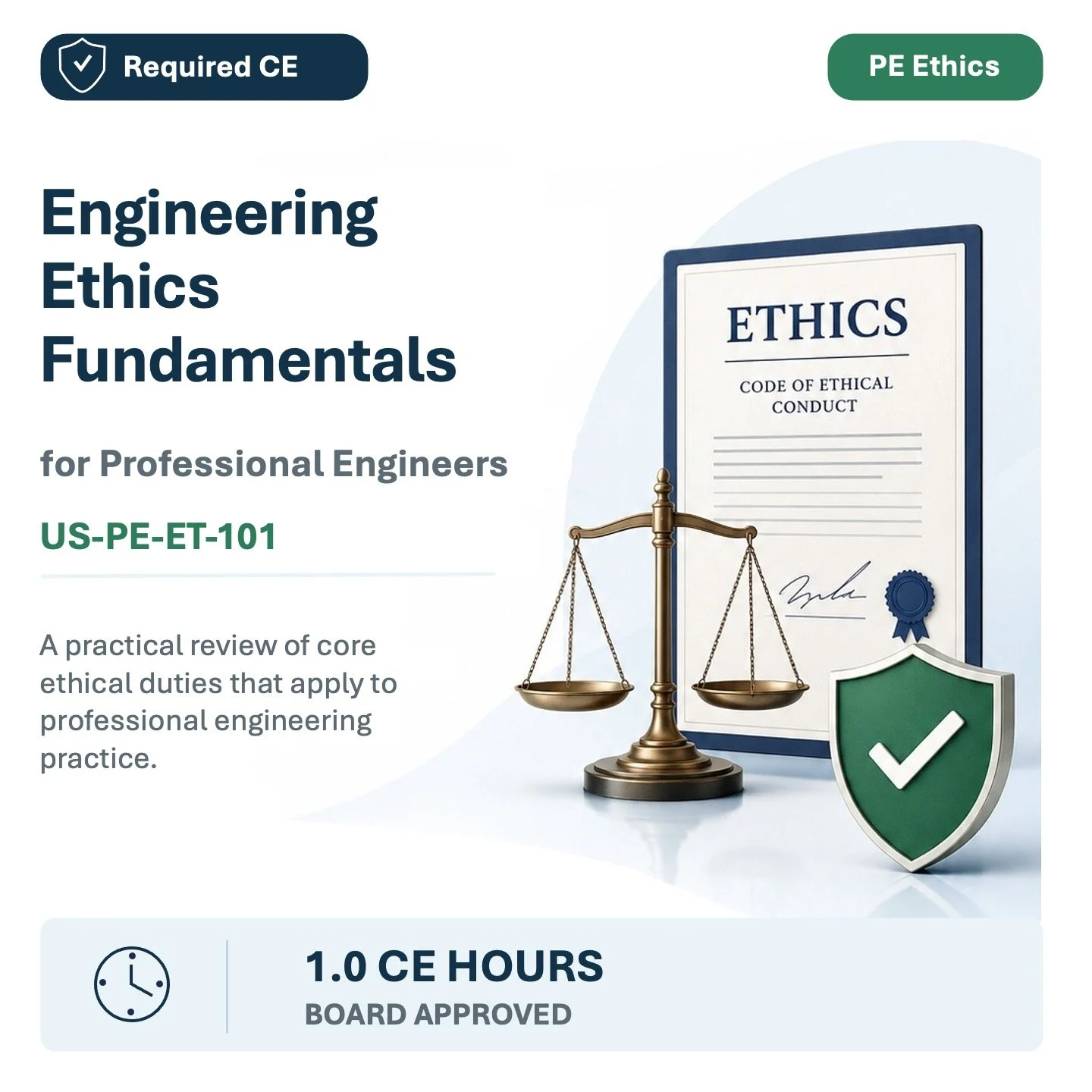
Engineering Ethics Fundamentals for Professional Engineers (US-PE-ET-101) - 1.0 PDH
$26
$21
Maryland PE Continuing Education Requirements
Maryland professional engineers are required to complete 16 professional development hours (PDH) during each 2-year license term as part of the state’s Continuing Professional Competency requirements. At least 1 PDH in each 2-year term must cover content related to ethical concerns and conflicts in engineering practice, the professional engineer code of conduct, standards of practice or care, or laws and regulations applicable to the practice of engineering in Maryland. Qualifying programs should maintain and enhance professional competency and foster the improvement, advancement, and extension of professional skills and knowledge related to engineering practice. Acceptable content areas include technical, research, analytical, or design aspects of engineering; Maryland engineering laws and regulations; engineering-related computer hardware and software; standards of practice or care; professional engineering ethics; project management; risk assessment and management; emergency and disaster management; and similar topics relevant to the licensee’s field of practice. Maryland uses an approved-provider and authorized-provider framework, so licensees should confirm that courses are offered by a preauthorized, Board-approved, or otherwise authorized provider, or that the activity otherwise satisfies Maryland’s qualifying-program rules with proper documentation. Licensees are responsible for maintaining records for at least 4 years from completion of the qualifying program, including certificates of participation, activity title and description, dates and times attended, presenter name, and any other information required by the Board. Up to 8 excess PDH may be carried forward into the next licensing term, and the CPC requirement does not apply to the first renewal after initial licensure.
-
This course reviews the core ethical duties that apply to professional engineering practice. Topics include the engineer’s obligation to protect public safety, health, and welfare; practicing only within areas of competence; honesty and objectivity in professional reports and testimony; conflicts of interest; responsible communication; professional judgment; and the importance of maintaining trust in engineering decisions.
The course uses practical examples to help engineers recognize ethical issues before they become professional, legal, or board-related problems. It is designed as a broad engineering ethics course suitable for licensed professional engineers who need an ethics-focused continuing education hour.
-
This course is intended for professional engineers who need continuing education in engineering ethics. It is appropriate for licensed PEs, engineers in responsible charge, project managers, engineering consultants, public-sector engineers, and engineers who supervise technical staff or make decisions affecting public safety, clients, employers, or the public.
It is also useful for engineers who want a practical refresher on professional conduct expectations, especially in situations involving competence, conflicts, sealed work, client pressure, incomplete information, or public welfare concerns.
-
This is a self-paced online continuing education course. Learners review downloadable course material, complete video scenarios content focused on common state statutes and rules, and take a quiz to confirm understanding. The course is supplemented with videos and a podcast for alternate forms of learning. The material is designed for practical review and recordkeeping, and learners should retain a copy of the course material and certificate with their renewal records.
-
After completing the course and passing the quiz, learners receive a certificate of completion showing the course title, learner name, completion date, provider, and continuing education credit earned. The certificate should be retained with the learner’s professional license renewal records.
Training multiple engineers? Ask about group enrollment.